Thirty and counting.
Connoisseur of fine trash.
Not ever gonna make it,
but then again, who does?

The dice exist to resolve ambiguity.

CATEGORIES

  • The Public Domain Statement

    I believe copyright is a sham.

    I believe that lobbying corporations have turned what was originally a protection designed for the individual artist into a strangehold over ideas and culture in America, and by extention the rest of the world.

    Copyright existed so that I could make a work of art, and then for a reasonable amount of time after that, profit from that art. I am not directly opposed to this idea. In fact, I think it’s a great idea. A creator of something should have, for at least a while, the exclusive right to create and distribute their work and profit from it. And by profit, I really mean, “make a living from.”

    Which is where my next bit comes in: The original terms for copyright were seven years from the original date of publication. Which means I make a book, or a painting, or a song, and for seven years, that’s Mine. You can’t reprint it or alter it without my permission. But then, seven years later, it’s free game. You have had seven years to profit and make a living from this single work of art; time’s up, better get back to those artin’ mines and make a second thing.

    The intent for this was twofold: It prevented one artist from relying on a single work for their entire livelihood, forcing one to create Again. And I philosophically believe that not just the art of creation is good for the human soul, but continued creation of art is good for the human soul. I made a lot of music before, I’ve made TTRPGs before, but nothing heals my soul after the long week of capitalist bullshit than sitting down and making something entirely new.

    Secondly, it prevents one from monopolising the culture. If a creation became so widespread and popular, it becomes part of the culture. It BECOMES PART OF THE CULTURE. The olden Gods like Zeus and Thor are part of the culture. The myths of older cultures are part of the culture. King Arthur and the Knights of the Round Table are part of the culture. Robin Hood, Peter Pan, Cinderella, Beowulf, all of these are part of our culture.

    So are Superman, Batman, Spiderman, Mickey Mouse, Pikachu. These characters are also a part of our culture. And we should be able to interpret them as we like, without threat of corporations stomping us down.

    I am under no illusion that anything we create for Tidal Wave Games could be as popular as those things. But, they could become popular. People may want to build on our ideas, whether they be mechanical game design or worldbuilding. Therefore, we want them to be accessible to the culture–after, of course, a reasonable amount of time has passed.

    Those who picked up CERES: THE PLANET THAT NEVER SLEEPS may have noted a piece of text in the table of contents & credits page: “All text contained within this book will become public domain on January 1st, 2033.” That is a legally binding statement, and it’s true. As of January 1st, 2033, all the text in Ceres will be public domain and anyone can use it or build upon it without attribution. As of the 4th printing of the CUSC Core Rulebook coming early next year, it will contain the same text, with a revised date of 2032–ten years after original publication.

    This is our commitment, to the culture of the world. We hold on to the copyright for ten years. You can do whatever you want after that. The art, is not public domain, because we are against the AI image war and we are pretty concerned about what letting our images into the public domain might do for that, among other things. But, we aren’t going to come after you for making new art based on those images–reinterpret the world as you see fit, fan artists!

    Furthermore, if you’re interested in working with some of our content or want to make stuff based on it–just talk to me. We are extremely open and want people to create for us. We’ll even pay you and help you put it out!


  • Hit Dice, Hit Points & Weapon Damage

    , ,

    I’ve been thinking of doing a little revision to the way my inevitable 2024 revision of what else goes. (There are two alternative versions of this idea, always in motion, the future is: 5e Killer and _&_.) craphack goes.

    I just don’t like the hit dice attached to certain classes in 5e. The grognard in me likes d4 HD wizards. At first I thought I could revise it so there were 3 groups of HD that all made sense together, but unfortunately there are four martials and 5 categories if we use every die, so it’s still a little fucky. Still, here’s the list I came up with:

    image

    So, let’s talk a little bit about what Hit Dice are used for in the game. Primarily they are used to determine your Hit Points. You roll your Hit Dice and add your CON Mod to determine how many Hit Points you get per level.

    My new proposal is that PCs should add their CON Score (so, 13 instead of +1) at level 1, and then never again. So 1st level PCs would be much more survivable, but their HP total would be lower eventually. I haven’t mathed this out yet, but I really want to try it out.

    You also use Hit Dice on a Short Rest to recover lost Hit Points. Perfectly good design, we won’t be altering it here (although we are altering Short Rests–more on that later).

    Finally, I want to propose–I don’t know if I like this yet, but I want to propose–using Hit Dice for your Weapon Damage. Perhaps this will be one of the things that sets _&_ apart from 5e Killer. (Are these two products ever going to coalesce? Probably not.) Hit Dice are badly named in the legacy game and new players come with the expectation that their Hit Dice might actually be the dice they use to hit things. Why not indulge in that? Just make every class do the damage of their Hit Dice when they do weapon attacks.

    This means you can alter the weapons table substantially, because the differences between weapon damage no longer exist. If we were starting from scratch, we could maybe use the weapons table from Wolves Upon The Coast but we aren’t, we’re starting from the table I’ve had for a couple years and recently redid to include WotC’s Weapon Masteries and then my own Martial Options (forthcoming).

    I’m always interested in thoughts about design like this. If you’re interested, feel free to jump on the post, or contact me however you prefer. Stay gold.


  • Space Travel in SEE YOU, SPACE COWBOY…

    They say you can’t help but put your kinks into your work.

    One of my absolute favourite things to do in my tabletop games is to force the players to do something they don’t want to do.

    Man. That makes me sound like an asshole! Let me figure out how to say that differently.

    The world around us is full of shit we don’t want to do. We have to go to work to sell our time to someone else in order to pay our bills, and to afford food that our body requires to keep running.* We have to interact with people we don’t want to interact with, because they control a thing we want. We have to renew licenses, pay taxes, maintain a vehicle, clean the house even if we haven’t been to that part of the house in a week because it still somehow gets dirty. We have to do things we don’t want to do.

    *I personally resent the fact that I have to put food into my body at seemingly random intervals throughout the day, multiple times. The amount of time I waste every day buying food, preparing food, eating food and expelling food is astonishing and I resent almost every second I do it. You know that white oatmeal gruel they eat in the Matrix? “Everything the body needs?” Yeah gimme that. Just shoot it out of a canister into my mouth and solve 90% of my problems.

    Red tape is the only thing the players can’t stab their way out of.

    I love making the players deal with mundane bureaucracy. When my D&D group first entered my huge metropolitan city Dawnharbour, they had to give up all their gold at the gates of the city in exchange for a bank check, that they had to cash at the bank in exchange for Dawnharbour’s paper money. (The bank took 10%, of course.) When they wanted to build a tavern, I outlined a detailed list of all the taxes and licenses they would need and all the guildspeople they would need to speak to and get approval from. And then I had a guy show up at their house to collect their taxes for the year–not their home taxes, their adventuring taxes.

    The players hated this. They hated every second of it. The bullshit that they had to do in order to achieve their goals. I loved it.

    It’s not something I put in every game session, but it’s something I think should be there. Occasionally the players should just have to deal with something that’s a pain in the ass. I don’t know why I feel this way, but I do. Maybe this is the way I make the world feel realistic.

    I’ve occasionally gotten comments about the space travel rules in our game SEE YOU, SPACE COWBOY…–that they either don’t make much sense or it isn’t clear why they exist. They are a little bit crunchy–nothing close to the original Traveller space travel rules, but they require you to roll a check, figure out how many days a journey might take, buy fuel, and then roll some dice to figure out how much you spend on food for the journey. (It should be noted that there are zero mechanical consequences for not eating or being hungry in CUSC, merely that you must announce at every opportunity that you are hungry. Unless you’re smoking.**) You can wrap your head around it. It isn’t difficult. But, it is annoying.

    **Smokes in CUSC cost $$1, by the way. Everything else in the game costs $$50 or a multiple thereof. This means that if you smoke, you will always have a surplus of $$49. In an early playtest, someone asked “Why not just make smokes $$50?” and when I asked if having $$49 left over annoyed them, they said yes. I responded with, “Congrats, that’s the point!”

    That’s really the point. Getting from point A to point B can be annoying, and you should plan ahead for it. And, everyone does it even if it’s a pain in the ass, so you have to do it too.

    You could excise these rules from the game and just let them gallavant from planet to planet, and if that’s what your group enjoys then I’m not going to stop you. But I think you lose something about the world. The players should always have the sense that the world is out to fuck them over at every turn, and by making space travel difficult, you make it something they have to deal with.

    Also, it opens lots of opportunities for generative storytelling. They can end up off course, adding multiple days to their journey, which can cause them to run out of fuel. Now they have to stop off somewhere they weren’t planning on stopping at, interrupting everything they wanted to do, and now they have to go somewhere else. This is GREAT for a Bandleader because now they get to riff on a whole new area they weren’t planning on using. If the players are too broke to get back on the space road, then they need to go hunt a bounty that’s around here. That’s great stuff! And it’s super in genre for the show.

    I don’t know how to end this article. I just felt like writing about why the rules are the way they are, and why they’re in the game. Stay gold.


  • Cereal Box Hexcrawl

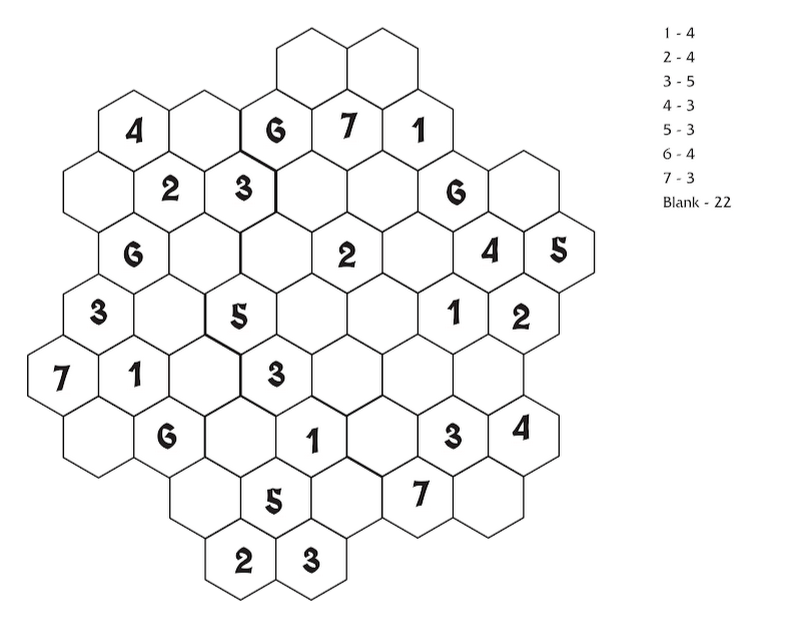
    I was at my day job grocery shopping about two months ago when, on the back of a store brand Cheerios box, there was a hexcrawl.

    image

    Okay, the box says it’s a sudoku puzzle. I don’t know shit about sudoku. It’s a hexcrawl now.

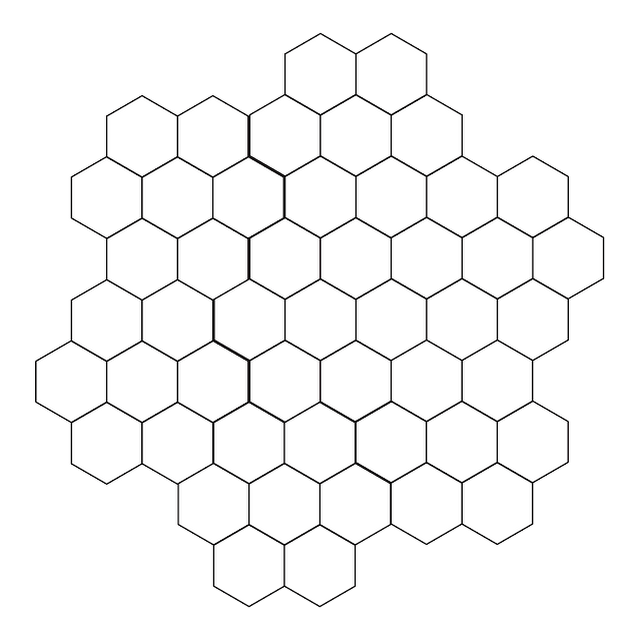
    The first thing I did was recreate the hexcrawl in Affinity Publisher. You could do this with any graphic editing software or even by hand on paper, I just used what I’m comfortable with. I counted how many of each number and wrote it on the side; I also created a blank template that you can use.

    image
    image

    I left the “region borders” out of mine because I felt like they restricted the creativity too much, but you can add them back in.

    image

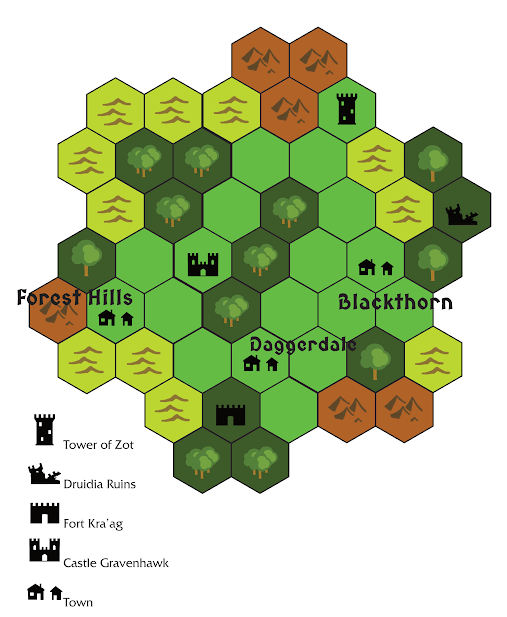
    The next step is to colour the hexes. I assumed we would need towns, dungeons, forest, hills and mountains, so I grouped them together based on what felt right and how many I had of each. I then split up the blank tiles based on mostly grasslands but went with what was around.

    image

    Lastly, I added icons from Hexographer. I named some evocative dungeon locations, some crap 5 minute town names, and boom–we have an adventuring location ready for play. This took about an hour and most of that was graphic design!

    The icon packs I used are here:
    https://welshpiper.com/packages/classic-hexographer-icons/?sfw=pass1685689538
    https://www.hexographer.com/extra-icon-sets/multicolored-classic/

    So, fine, I made a local area. But, my wife is also running a Spelljammer campaign, and needed her own local area. To the rescue: The Cereal Hexcrawl.

    image

    We named a few areas and generated some interesting locations using the tables found in Stars Over Stormwreck by Mike Shea of Sly Flourish. I can’t believe this kind of stuff wasn’t in any of the books for Spelljammer!

    After we had our locations, we just spread them out based on the numbers we had on our hex map. We might have moved a couple around. Then, I opened my hexcrawl up in Affinity Publisher and did the work doing graphic design (including the space background). I’ve got a print copy of the map on 11×17 paper coming from Printkeg right now!

    Protip: If you are doing a space hexcrawl or other kind of space map, for personal use, Googling “planet clip art” or other things like that is a GREAT resource. High resolution transparent background graphic representations of planets? Gimme that shit!

    So you can see how easy this is to pull off. I made my original hexcrawl in about an hour over my lunch break, and that includes finding all the icons and stuff. It’s so easy to come up with a local area from this and the iterations and changes you could make are seemingly infinite.

    Get out there and make your hexcrawl!


  • My Wilderness Hexcrawl Rules

    ,

    Wilderness DM Screen by Greg Rutkowski; from WotC

    This post began life as an attempt to redesign the Ranger for 5e. I’m still going to do that, but it diverted to an explanation of my wilderness hexcrawl procedure, which I don’t believe I’ve ever shared online in full.

    I am on record as saying “exploration” is everything the players do that isn’t talking to people or fighting monsters, but for the sake of this, we’re going to focus on wilderness “exploration” and parts of the game that use that.

    So to do that, we need to talk about what this looks like in my game and at my table. All overland travel in a dangerous area is on a 6 mile hex grid, and we engage in the “gritty realism” rest variant when we use it. This means a short rest is 8 hours overnight, and a long rest is every 7 days/short rests or if the party spends 24 hours within the same hex (which also puts them back on “normal” resting; unless, of course, they travel outside that hex again). Again, this is a “dangerous area,” which is most of the parts of the world that adventure takes place in. If the players are travelling a long distance that isn’t the focus of the adventure (for example, they travel weeks from the city of Dawnharbour to the city of Steelhaven) then that can be handwaved; they’re sticking to roads and not worrying about it, because the Adventure is not The Travel.

    When the party travels through hexes, we determine their planned route and weather. This determines how many hexes they can go through. The party can travel 24 miles per day through normal terrain, which equals 4 hexes; difficult terrain like swamps, deep forest or mountains may reduce this to 3 or even 2 hexes.

    For each hex, the players roll what I call “Advancing d6s.” This means they roll, in order: 1d6, 2d6, 3d6, and finally 4d6. This produces several results, between 1-6, 2-12, 3-18 and finally 4-24. This corresponds with this simple table:

    image

    The d6 table is landmarks such as burial mounds, obelisks, etc. The d8 table is several encounters that are not necessarily combat related, such as a group of fake adventurers, a Peryton that attempts to capture a player, or a golden Fey steed appearing on the horizon. It also contains an entry called “Character Event,” which is a series of encounters built around the PCs. (I’ll go more into Character Events in a later post.) The d12 table is larger landmarks and mini-dungeons or lairs, including things like wild magic zones, dead magic zones, etc. Finally I have lists of combat encounters. Embphyrkhaksis is the BBEG of the campaign this particular table is taken from; an adult red dragon who can appear any time all four players roll 6s. (For each encounter with Embphyrkhaksis, I raise the threshold for him to abandon the encounter by 10hp; initially they just had to deal 10 damage to the dragon for him to flee, but after 4 or 5 encounters they need to do 40 or 50 damage for him to leave. Exciting!) I then arrange the encounters we rolled into the best narratively cohesive order, based on my judgement as a DM and my absolute, flawless, omniscient knowledge of what is Actually in the hexes ahead of them; I ignore results that are boring or have been used recently if there is a legitimate feature in a hex that I’ve previously determined.

    At a later time, I’ll update this post with a formatted PDF of my table so you can alter it and make your own.

    When the party spends the night in the wilderness, they need to set up watches. My rules assume a 4 person party using 2 hour watches. (Elves can take 2 watches and still gain the benefits of a short rest.) During a watch, they roll 1d6; on a 6, an encounter happens. The character makes a Perception check to see if they notice the encounter; this is contested against a DC equal to a passive stealth check made by the monster. (If there are multiple monsters, I use the monster with the highest bonus.) If they fail, they are Surprised, which can be really dangerous with ¾ of the party still sleeping, outside of their armour. If they pass, the party member has the opportunity to wake up the other players and put on their armour. (Realistically, this takes 10 minutes, but the start of the encounter is a little abstracted in this case.)

    This is the core of my wilderness overland travel system. It’s easy to see, when it’s laid out like this, that there are several “hooks” by which the Ranger can key into to make them feel very useful in this style of campaign.


  • Average Monster Stats for 5e

    ,

    I’m working on a new DM screen, and one thing I decided is that I’d like to have the average stats for each monster type on there, to make improvising monster stats faster and easier if I need to. You could combine this with something like Monster Manual On A Business Card to quickly create a monster; you can use these stats as their saving throws while taking the to-hit and spell save DC from MMoaBC, for example.

    You can also use these with something like MCDM’s Minion rules to quickly come up with minions for your battle. Suddenly need a horde of monstrosities to attack your players, but don’t have time to flip to the Chimera to alter it? Just look at the Monstrosities average stats on your screen!

    Some monster types (like celestials, fey, ooze etc.) lack large representation in the Monster Manual; if someone can provide a spreadsheet with all the available 5e monsters (which probably isn’t strictly legal to distribute), I’d love to update this to be accurate!

    I also have provided only modifiers instead of concrete stats, to save both space and to provide for more ambiguity between individual monsters. IMO it isn’t relevant if the average stat is a 12 or 13, what matters is that both are +1.

    Without further ado:

    Aberration: +2 +2 +2 0 0 0
    Beast: +1 +1 +1 -4 0 -3
    Celestial: +5 +4 +5 +3 +4 +5
    Construct: +2 +1 +2 -2 -1 +2
    Dragon: +6 0 +5 +2 +1 +3
    Elemental: +2 +1 +3 -1 0 0
    Fey: 0 +2 +1 +1 +1 +2
    Fiend: +3 +2 +3 +1 +1 +2
    Giant: +6 0 +4 -1 0 0
    Humanoid: +1 +1 +1 +1 0 +1 0
    Monstrosity: +4 +1 +3 -2 +1 -1
    Ooze: +2 -3 +3 -5 -2 -5
    Plant: 0 -2 +1 -2 -1 -3
    Undead: +1 +2 +2 0 +1 +1

    Hope this helps your game!


  • You Should Start With A Fifteen

    ,

    Or: Why You Should Abolish Stat Bonuses At Character Creation

    I’ve been thinking about stats a lot recently.

    It all started with the talk around Tasha’s Cauldron of Everything, a D&D 5e supplement that Wizards of the Coast released last year.

    (Well, actually, it started around January 2019 when I started my big campaign using N1: Against the Cult of the Reptile God, but that’s not really relevant to the current discussion.)

    Tasha’s added a new optional rule that allows you to change your racial bonuses at character creation around. There are two reasons that this was done, which I’m going to discuss under the cut:

    1) There is an argument to be made that these bonuses represent biological differences between species. Some people do not like the idea that, for example, “all dwarves are 2 points higher than all elves.” This could be attributed, in some people’s eyes, to a kind of real world bioessentialism that they find uncomfortable and don’t want to see in the game.

    Let me be clear: That kind of stuff in the real world is disgusting and not “realistic” or based in any kind of fact. It’s gross and if you’re here to argue for that, get off the train now.

    But, I don’t think that elves and dwarves and hobbits are biologically the same species the way we think of human races. You may disagree! If that is so, please stay on the line, because this is the last time I’m going to talk about the fiction for this and we’re going to exclusively talk about numbers going forward. I’m not here to convince you that these stats should represent biology.

    To others, the idea that ALL dwarves have innately high constitution, or elves are innately more lithe than a gnome, is stifling to them. Why can’t I be a “fat elf” who has low Dex, or a “dumb gnome” who has low Int? To those people, I say: Put your low numbers into those stats. If you have an 8 and want to be a low dex Elf, put that 8 in Dex. Your extra 2 Dex will instead make that a 10, which is still +0 when turned into stat modifiers. That’s still bad! But, don’t worry,

    2) Getting rid of the need to synergise race and class. Let’s say I want to play a High Elf Paladin. A High Elf gets +2 to Dex and +1 to Int. Well, unless you want to build a Dex-based Paladin, a Paladin needs high Strength, Charisma, and Constitution, usually in that order. Dex is one of the stats you can actually dump, since you’re going to want heavy armour and it’s alright if your initiative is lower and Dex skills aren’t good–you probably got a Rogue or Monk in the party who can handle that anyway.

    But, if I had instead chosen a Dragonborn Paladin, I would be able to have higher Strength and Charisma than if I chose an Elf. The Dragonborn Paladin will start with 17 Strength, whereas the High Elf Paladin has a maximum possible of 15 Strength.

    There’s a group of players who wants to use these rules because, to them, the High Elf Paladin is “falling behind” the Dragonborn Paladin. They aren’t as strong or charismatic as another option they could have had. Decoupling the bonuses from race and allowing you to place these stats wherever you want means this player can play the race that they want to roleplay as, while their stats can be the same as the Dragonborn Paladin.

    I see the argument for this. I don’t want a player to feel like they had to choose the mechanically worse option in order to play the character they want. Maybe they think Dragonborn are stupid and don’t want to be one. Maybe the Elf culture in my world is super appealing to them and the Dragonborn culture isn’t. I get that! I don’t want someone to have to play something they don’t want to. Which is where I started to think about this.

    So let’s talk about why we’re here.

    I think the game is balanced around starting with a 15 in your main stat at level 1.

    I don’t think WotC balanced the game with rolling in mind, because it’s volatile. I think, prior to a few years ago, they tested the game using the standard array of 15, 14, 13, 12, 10, 8. Point buy can also get you these numbers.

    Furthermore, I don’t think they assume you will choose a synergistic race. I think they balanced the game assuming every player might not choose a synergistic race–a high elf paladin, a dwarf wizard, a gnome fighter, a Dragonborn rogue. (Sounds like my kinda party, honestly.) So you can’t balance the game around synergistic races; you have to baseline assume every player will have at least a 15 in their main stat, and that that might be the highest they have. The player who chose a synergistic race gets to have a little edge, and hopefully their fellow friends at the table don’t resent them too much for doing so.

    So, I think you should ditch bonuses at character creation entirely. Why do I think this?

    The CR system seems to expect it. They have to have a baseline for testing these things out; a player character starting with a 15 in their main stat will have +4 to hit (+2 from the 15, +2 from proficiency bonus). If you look at some expected monsters around this level, their stats actually bear this out–a ¼ CR Goblin has +4 to hit. A group of 4 of those will have basically the same expected damage output to a party of 1st level characters who expend no resources–spell slots, special abilities, magic items, etc. Of course, players have all those things, which throws the encounter in their favour. This is actually the expected behaviour of the game. The players should be more likely to win an encounter than they are to lose it; they’re the heroes, they’re the player characters, the stars of the show. Most basic encounters, like running across a pissed off owlbear in the woods, or two ogres who want to steal your money, or finding a camp of goblins, the players should probably have at least a 60% chance of winning without any real consequence besides lost resources (spell slots, special abilities, magic item charges or consumables, etc.).

    Better level progression and room to grow. It means a better curve of progression around level 4 and 5–your to hit modifier goes from +4 to +5 at level 4 and then to +6 at level 5, where it remains until level 8 where it goes to +7. I think everyone (fighters excluded) having a +7 at level 8 to 11 is absolutely where the game should lie. I think having any higher than that severely breaks the game and makes it harder to anticipate CR and expected damage and to hit levels.

    You can give the players magic items! If the players only have +4 to hit at level 1, you can give the fighter a +1 magic sword and now they only have +5 to hit. That’s…exactly as much as if they had chosen a synergistic race! You aren’t throwing the balance off any more than it already is by default.

    A 15 is already superheroic. I’ve seen a lot of people arguing lately about this stuff and in my opinion, they don’t see what a 15 means. I think if you have a 15 Str and 14 Con, you are basically Brock Lesnar or Dave Batista. A 15 Dex character is 6 months of training away from being a viable competitor for the Olympic distance running team. A 15 Int character can do advanced calculus on the back of a napkin. (An 18 Int character can do particle physics in their head.) A 15 Cha character can talk most people into anything. This is what I assume. Most people have a 10 in ALL their stats. I bet you know someone in real life who has 7 Int.

    You solve problem 1 up above. If the bonus doesn’t come from your biological differences from other humanoid species, where do they come from? They can’t just float in the ether. And it can’t be that your stats from the array or point buy are supposed to represent the biological differences between individuals–you have 15 Dex, you are *already* faster than other dwarves who would have a 10; you don’t need to have 17!

    You can continue to use new races. In the new books, WotC has done away with the static bonuses and allows new races to place their stat bonuses wherever they want; I suspect the rereleased races in the upcoming Mordenkainen’s Multiverse of Monsters and the 2024 revised Player’s Handbook (for the assumed 50thE version of the game–hey WotC, here’s a free one: Call it 50th Anniversary Edition or 50th!) will do the same. If WotC has a revised method of generating stats that believes the game is balanced around starting with a 17, then I’m probably going to switch to using that in 2024. I don’t allow the Tasha’s optional rule in my game (I prefer the bonuses come from your biological differences from other species), so these new races have a distinct advantage over older ones. I mostly prefer the PHB races exclusively anyway, but I might decide any time in the next 2 years (or after that, if I decide 50thE isn’t for me) that I want to allow Thri-Kreen in my world, or Firbolg, or Giff, or Astral Elves–and I’d like to be able to use them without having to make up their static bonuses.

    In my current games, I’m having people roll 1d6+8 for each stat. This gives a minimum of 9 and a maximum of 14; still not 15, but I allowed them to apply racial bonuses as per the PHB, with the explicit note that they were not allowed to exceed a 15. I’m still trying to figure out a rolling method that generates a range between 8 and 15 so I can finally get rid of racial bonuses at character creation entirely.

    Except for humans. They’ll still get +1 to everything and can go to 16. This is so people make humans. 🙂